

When Japan Actually Feels Crowded (and Where It Doesn’t)
What to know before you go
One of the biggest concerns travelers have right now is whether Japan will feel overcrowded.
You’ve probably noticed the headlines. You’ve seen the images. You’ve heard people say places like Kyoto are “too busy now.”
There’s some truth to that.
At the same time, it’s easy to misunderstand what’s actually happening on the ground.
Japan doesn’t feel crowded everywhere. It doesn’t even feel crowded all day. What most travelers experience is something more specific and more predictable once you know what to look for.
Certain places get busy
At certain times of day
During certain parts of the year
If your plans line up with those moments, it might feel intense.
If they don’t, the same locations can feel completely manageable, sometimes even calm.
TL;DR - When/Where Japan Feels Crowded
Japan doesn’t feel crowded everywhere, all the time; rather, it feels crowded in specific places at specific times
The busiest window is usually late morning through mid afternoon
Peak seasons amplify crowding, though timing still matters more than most people expect
Small shifts in when and where you go can completely change how your day feels
Where crowding actually shows up
Crowding in Japan tends to concentrate in well-known areas rather than spread evenly across cities.
Kyoto is usually where travelers notice it first. Places like Higashiyama, Fushimi Inari, and Arashiyama draw a high number of visitors into relatively compact spaces. The combination of narrow streets, tour groups, and clustered sights creates that “this is busy” feeling very quickly.
That’s why Kyoto has earned the “overtourism” label in recent years. But it’s not all bad. Hardly!
You just have to know where to go. And when. Be strategic.
That applies to Kyoto, but also to some other popular places in Japan… like Tokyo, Osaka, even Hiroshima/Miyajima and Kanazawa to some extent.
Tokyo works differently. It’s a much larger city, so the crowding is more localized. You’ll feel it around places like Shibuya Crossing, Asakusa, and Takeshita Street in Harajuku. Step a few blocks away, and the atmosphere often shifts right away.
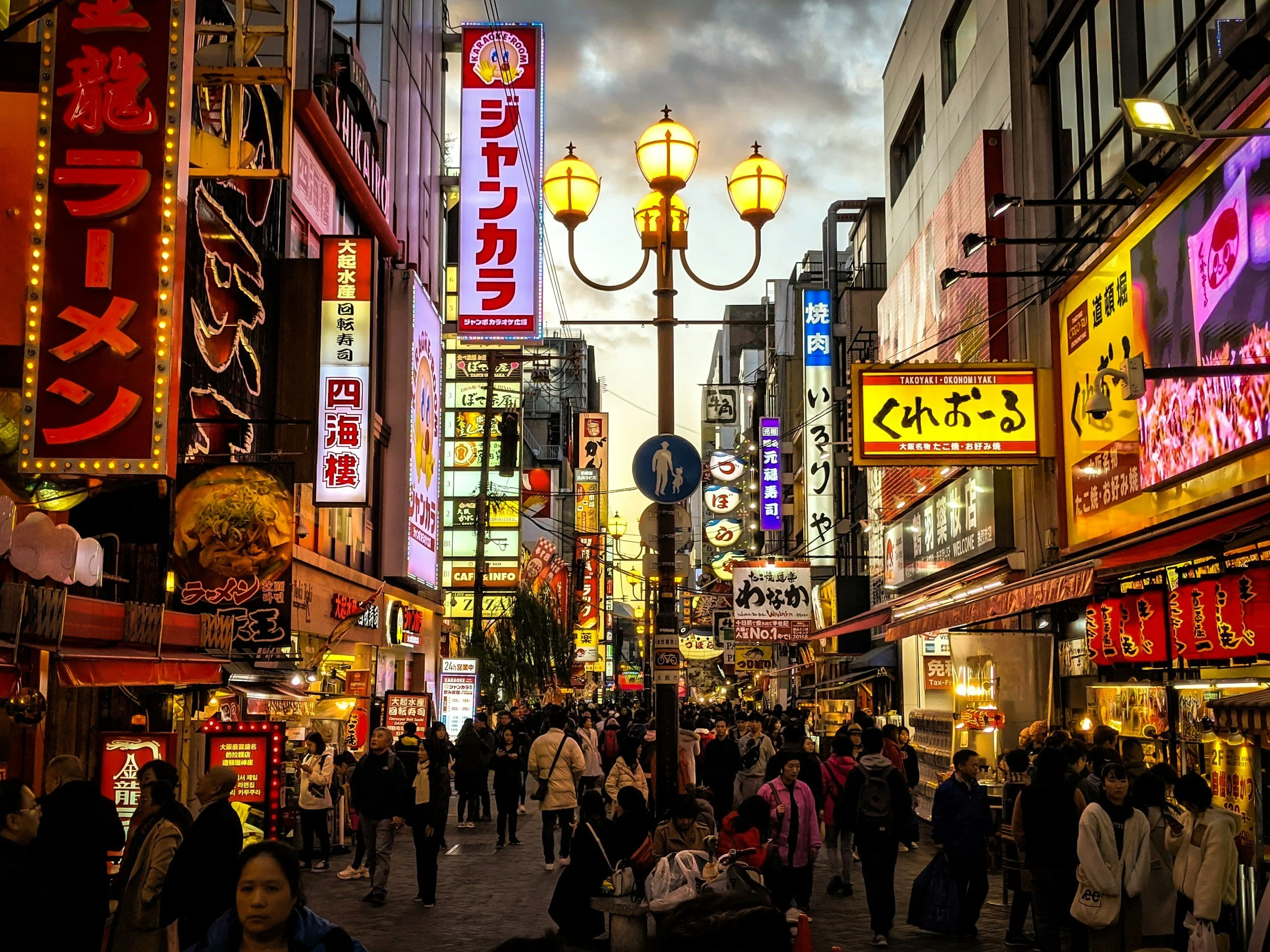
You’ll see similar patterns elsewhere. Nara Park tends to peak around midday, and Osaka’s Dotonbori fills up in the evening. These aren’t constant conditions. They’re moments.
When it actually feels crowded
This is where expectations usually need adjusting.
Most people think in terms of seasons, and that matters. But in practice, time of day is just as important.
In many popular areas, the rhythm of the day follows a fairly consistent pattern.
Early mornings tend to feel open. By late morning, things start to build. Midday into early afternoon is when the density is most noticeable. After that, it gradually eases again, especially toward evening.
That late morning to mid-afternoon window is when most travelers encounter the crowds they remember.
Seasonality still plays a role. Cherry blossom season, autumn foliage, and Golden Week all bring more people into the same places. But even then, timing within the day can change the experience more than people expect.
Limited Time Offer
Get a FREE Second Opinion on Your Japan Plans
Concerned about crowds or timing? Share your biggest question and we’ll record a short personalized video to help you understand what your trip might actually feel like on the ground.
REQUEST MY FREE VIDEOWhat a crowded day in Japan actually feels like
This is often where the disconnect happens between expectation and reality.
You might arrive somewhere mid-morning and feel like things are already busy, though still manageable. As the day moves toward midday, the pace slows. Popular viewpoints have clusters of people. Movement becomes more about navigating space than exploring it.
It’s not necessarily overwhelming, though it’s noticeably different from what people imagine when they first plan the trip.
Then later in the day, something shifts. The same place begins to open up again. The crowds thin out. The experience becomes more relaxed without you having changed locations.
That’s the part many people don’t anticipate.
Why Japan can feel more intense than expected
There are a few reasons why these moments stand out.
Japan’s built environment plays a role. Many of the most popular areas were not designed for large volumes of visitors. Streets are narrower. Spaces are more compact. That naturally increases the feeling of density.
There’s also a concentration effect. Travelers tend to visit similar places, especially on a first trip. Even though there’s a wide range of options across the country, a relatively small number of locations receive a large share of attention.
Then there’s the gap between expectation and reality. Images online are often taken early in the day or framed carefully. Arriving at peak hours can feel different from what those images suggest.
What most travelers do without realizing it
Most people don’t set out to experience crowds. They just fall into patterns that lead them there.
They start their day a bit later. They follow routes that make sense on paper. They visit the same places they’ve seen recommended elsewhere.
Each of those decisions is reasonable. Taken together, they place you right into the busiest part of the day.
How small changes make a big difference
This is where things become practical.
The goal isn’t to eliminate crowds entirely. It’s to shift your experience so they don’t define your day.
A few adjustments go a long way:
Starting earlier than you normally would can change the tone of an entire morning
Using late afternoons and evenings more intentionally opens up opportunities in the same areas
Staying closer to key locations gives you flexibility to move outside peak times
Mixing well-known spots with quieter areas creates a more balanced day
None of this requires a complete overhaul. It’s more about how the day is structured than what’s included.
The Japan travel trade-off most people miss
Avoiding crowds completely isn’t realistic, and it doesn’t need to be.
Some of the most well-known places in Japan are popular for a reason. You’ll likely want to experience them.
The key is knowing when to be there and when to step away.
A well-planned trip includes both moments:
time in places that are lively and active
time in places that feel quieter and more open
That balance is what changes the overall feel of the trip.
What changes when you get this right
When timing and expectations are aligned, everything starts to feel easier.
You spend less time navigating around people. You move through places more naturally. There’s more space to take things in without feeling rushed.
The destinations themselves don’t change.
The experience of them does.
Plan with Confidence
Get Clear on Your Japan Trip Before You Book
If you want to avoid the busiest times and make confident decisions about your itinerary, we’ll walk through your plans together and help you get it right from the start.
BOOK YOUR CONSULTATIONPlanning around crowds
If you’re trying to figure out how to balance popular areas with quieter moments in your own trip, that’s something we help with early in the planning process.
You can also explore some of our related articles:
Frequently Asked Questions
Is Japan overcrowded for tourists?
Not everywhere. Crowding is concentrated in specific areas and times, especially in popular districts and during peak seasons.
What is the most crowded time of day in Japan?
Late morning through mid afternoon, roughly 10:00am to 3:00pm, is typically when crowd levels are highest in popular areas.
Is Kyoto always crowded?
Some areas can be, especially during peak hours. Other parts of Kyoto remain much quieter, particularly outside the main sightseeing zones.
What is the least crowded time to visit popular places?
Early morning and evening tend to be noticeably calmer than midday, even during busy seasons.
