

Travelers spend weeks planning their Japan itineraries.
They study maps. They read blog posts. They compare notes from friends who have visited.
The final plan usually looks balanced. It has sightseeing, food, cultural stops, green space and pockets of free time. On paper the trip appears calm and well paced.
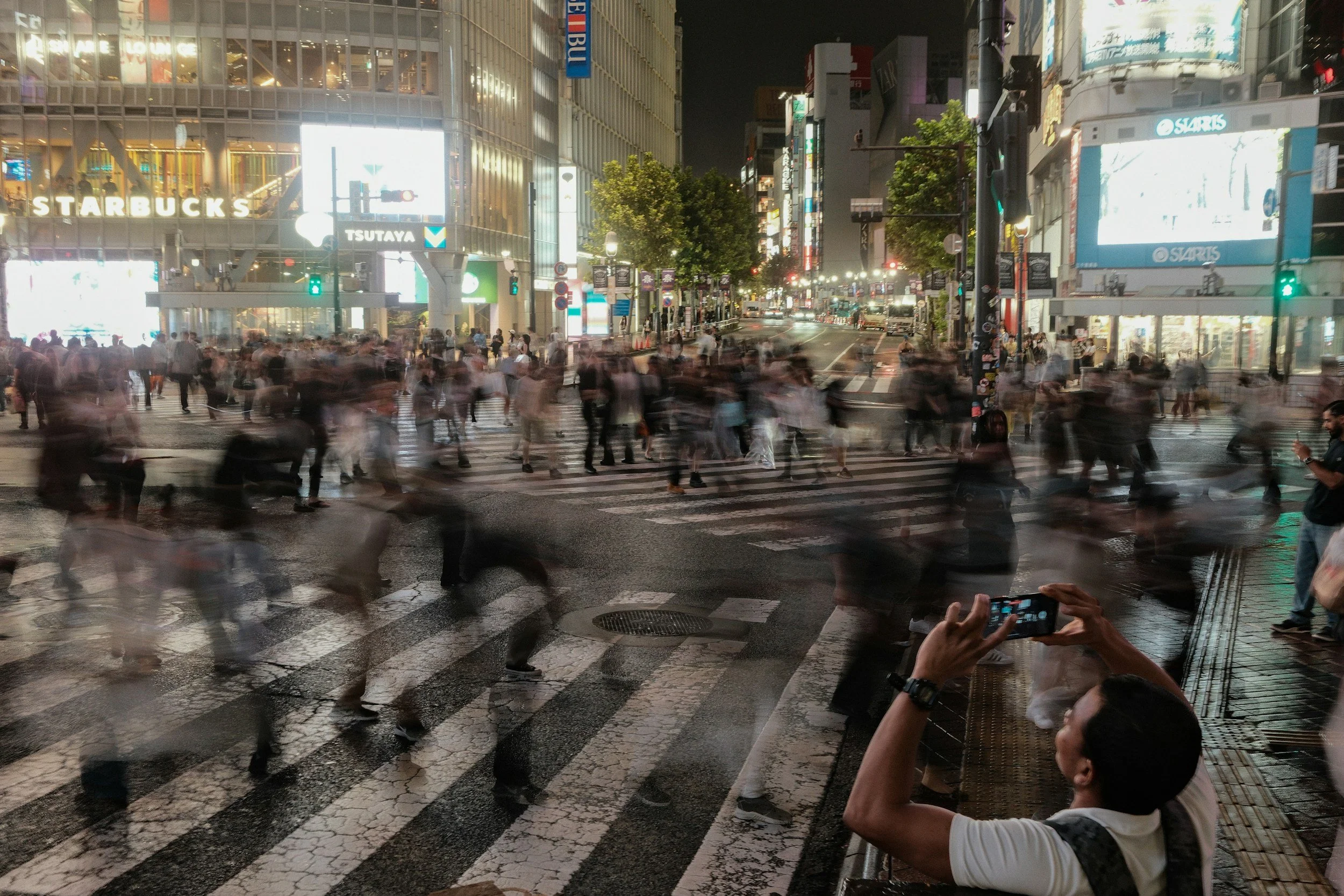
Then they arrive in Japan, have a great time but it’s all so much a blur.
The trip feels faster. The days feel exhausting. The schedule feels tighter even though nothing changed from the version they built at home.
Many travelers describe the same sensation. They feel as if they are always catching up. They move from place to place with less ease than they imagined. They reach the end of each day more tired than the itinerary suggested.
This experience is common. It does not mean you planned poorly. It reflects the simple reality of Japan travel. That a city or a country can feel one way from afar, and another way once you stand on its streets. The difference is not always dramatic, but it is enough to change how a day flows.
In this edition of the Japan Travel Pros blog, we’ll take a deeper look at why even a solid itinerary can feel rushed, and why the actual experience of Japan travel has a that no online map or itinerary template can fully capture.
Why does the map feel different once you start walking?
Maps flatten reality. Japan is no exception.
Maps make everything look tidy. They show clean lines, labeled stations and predictable walking routes. They give a sense that you can glide from place to place. The truth is more textured.
A station in Tokyo like Shinjuku or Shibuya is practically its own city. Transfers involve long passages, staircases, escalators and waves of people moving in every direction. Even with perfect navigation you can lose many minutes in the flow.
That’s because you are passing through a space that is built on a large scale.
Walking through popular neighborhoods in Japan adds another layer. Locals move with purpose. Visitors move with curiosity. Delivery carts, bicycles and small groups create small pauses you cannot predict. Even a short walk becomes a sequence of micro decisions and gentle adjustments.
These details do not ruin anything. They simply mean that a ten minute walk in theory and a ten minute walk in reality are not always the same. You arrive where you planned to go, but with a little less energy than you expected when you first sketched out the itinerary.
The lesson here? Japan trips take more planning and more flexibility.
Why do crowd levels (especially in Tokyo, Kyoto & Osaka) rise so quickly?
Japan has predictable crowd patterns once you know what to look for. First time visitors do not see these patterns until they are already in the middle of them.
Kyoto is a good example.
A place like Gion or Higashiyama can feel peaceful at eight in the morning. Small shops open slowly. Streets feel open. You can take a photo without waiting.
A couple hours later, the entire mood changes. Tour groups arrive. Social media FOMO-driven visitors gather at the same scenic spots. Narrow streets that were empty earlier now become slow moving rivers.
Tokyo has similar shifts. Asakusa, Harajuku and Shibuya all have early pockets of calm followed by sharp increases in people. These moments are not subtle. The change can happen within minutes.
A visitor who planned to reach an area at mid morning often arrives at the exact moment when the crowd reaches its peak. They did nothing wrong. They simply followed the itinerary.
Yet the pace of the day now feels different. Movement slows. Patience increases. The experience is still enjoyable, but it is no longer as smooth as it looked on paper.
Still gathering ideas?
Tell us what you're dreaming of.
If you aren't ready for a formal consultation but want to get your ideas on paper, share your trip details with us. Tell us your dates, your challenges, and what you’re most excited about, and we’ll see how we can help.
Share My Trip DetailsWhy does finding a meal in Japan take longer than planned?
Food is one of the joys of a Japan trip. It is also one of the biggest sources of lost time.
Popular places have steady lines. Local favorites close for mid day breaks. Smaller shops have limited seats and turn tables at their own rhythm. Opening hours are not always posted clearly in English. Machines for ordering tickets can create small delays.
Many travelers lose time because their plan assumed they could wander into a restaurant and sit down right away (and then linger after eating, which is discouraged at many restaurants in Japan). That does happen, but not consistently. If you arrive during the wrong hour the short meal becomes a longer one. If you try to find a specific restaurant and it is closed you walk further to find another.
Those extra ten minutes here and fifteen minutes there gradually reshape the entire day.
This is why a day that looks spacious pre-trip starts to feel tighter once you are actually hungry and on the move in Japan.
Why does weather shift the feel of many days in Japan?
Japan’s seasons are beautiful, but each one influences the pace of travel.
Spring is filled with cherry blossom seekers. Even if you do not plan a cherry blossom trip you feel the higher number of visitors in stations and public areas. Moving through crowds requires more time and energy.
Summer heat is a different challenge. Even short walks require more effort. People slow down. Water breaks become essential. Air conditioned spaces become small rest points that stretch the schedule.
Autumn attracts both domestic and international travelers who chase the color. Trains and scenic areas become busy. Driving times can stretch. Walking paths that felt easy in the morning feel slower in the afternoon.
Winter has crisp air and short daylight. Travelers try to fit the same number of activities into fewer hours of sunlight. Evening can feel earlier. The timing of meals and attractions compresses naturally.
Weather shapes emotion and energy. It influences your pace even if you do not notice it at first.
Why do mornings & afternoons in Japan feel like different cities?
From Tokyo to Kyoto to Osaka and beyond, cities in Japan have clear patterns.
Early morning is calm. Late morning fills. Afternoon becomes busy. Evening quiets again.
Visitors who plan their day based on personal schedule preferences rather than external reality often hit areas at the wrong moment.
A shrine that feels peaceful at eight feels crowded at ten. A market that feels charming at nine feels stressful by noon. A museum that felt perfect on paper becomes a long wait when everyone else arrives at the same time.
These patterns vary by neighborhood and season. Once you learn them, they are predictable. When you do not know them, the day feels rushed for reasons that are hard to identify in the moment.
Why does your Japan trip plan feel different in real life?
An itinerary is a model. It predicts a future day. It imagines how you will move and how each stop will feel. It assumes certain conditions will hold.
Travel takes place in real environments. Especially in Japan.
Those environments have their own tempo. You cannot fully understand it until you are inside it.
This is the root cause of that rushed feeling on your Japan trip/.
It is not the activities. It is not the structure of the day. It is not a lack of planning. It is the simple truth that travel is lived, not designed. The plan is a helpful guide, but the day has a life of its own.
When travelers arrive in Japan with the belief that the itinerary will unfold exactly as written, they sometimes feel pressure to stay on schedule.
When you allow the day to breathe, you’ll find a more comfortable Japan travel experience. The itinerary becomes a frame rather than a mandate.
What does a well paced Japan trip actually feel like?
A Japan trip feels well paced when the day has room to expand or contract.
You can slow down for a meal without stress. You can linger in a beautiful place without worrying about the next stop. You can shift plans when the weather changes.
You move through crowded areas at the right hour instead of the peak hour. You return to your hotel with energy rather than exhaustion.
Travelers to Japan often describe this feeling as calm. They see the same sights as everyone else, but they do not feel the same pressure. They wake up each morning with a clear sense of flow rather than a sense of catching up.
That experience is possible. It requires the right balance between planning and awareness of how Japan actually moves, and how you can move within it.
Want a Japan trip that feels smooth from day one?
If you want a Japan itinerary that matches your travel style and stays calm from the moment you land, schedule a consultation with Japan Travel Pros.
We can help you shape a trip that respects the natural pace and flow of each city, and gives you space to enjoy Japan without rushing through it.
Use the calendar tool below to find a day and time that works best for you.