

The Real Reason Planning Japan Feels Overwhelming in 2026
Japan has never been easier to research.
And yet for many travelers, it has never felt more overwhelming to plan.
A decade ago, people struggled because information was limited. In 2026, the problem is usually the opposite.
Travelers arrive with 47 browser tabs open, three AI generated itineraries, a dozen saved TikTok or Insta reels, conflicting Reddit advice and a growing feeling that they’re somehow planning the trip “wrong.”
We see this every week at Japan Travel Pros.
Most travelers coming to us are not unprepared. They’re often deeply researched. Some have spent months reading, watching and refining. The problem is that the sheer volume of information starts pulling the trip in too many directions at once.
Japan is a great destination when you bring your curiosity. But Japan travel quickly turns past the point of diminishing returns when travelers overpack and overoptimize their itineraries.
TLDR
AI and social media have made Japan trip planning easier to start but harder to finish
Travelers now face information overload instead of information scarcity
Reddit, TikTok, YouTube and AI tools often give conflicting advice
Many travelers become obsessed with maximizing the trip instead of enjoying it
Social media creates FOMO pressure to “do Japan correctly”
Experienced planning is increasingly about simplification, tradeoffs and confidence
Many travelers no longer need more information; they need reassurance, refinement and perspective
“The hardest part of planning Japan in 2026 is no longer finding ideas. It’s knowing which ideas to ignore.”
The Internet Solved One Problem - And Created Another
Twenty years ago, Japan felt mysterious to many travelers.
Train systems looked intimidating. Hotel websites were difficult to navigate. Regional destinations were hard to research in English. Travelers worried about basic logistics.
Today, AI can generate a two week itinerary in seconds. YouTube can show you the inside of almost any hotel room. Reddit threads dissect every train pass combination imaginable. TikTok serves endless “hidden gems” that stop being hidden the moment they go viral.
On paper, planning should feel easier now.
So why doesn’t it??!
Many travelers feel more anxious than ever.
Why?
Because the internet is very good at generating possibilities and very bad at helping people make peace with tradeoffs.
Fuelled by FOMO: The Hidden Pressure to “Do Japan Correctly”
Japan creates a specific kind of travel anxiety.
For many visitors, this is not just another vacation. It’s a trip they’ve imagined for years. Sometimes decades.
Visitors to Japan worry about:
missing something important
staying in the wrong neighborhood
wasting valuable days
making train mistakes
booking the wrong ryokan
going at the wrong pace (hello jet lag!)
accidentally building an itinerary that looks good online but feels exhausting in real life
This is especially true because Japan has become heavily documented online.
There are now thousands of videos explaining:
“best hidden spots”
“mistakes tourists make”
“how to avoid crowds”
“the perfect 14 day itinerary”
“places tourists don’t know about”
“top 25 things to do in Kyoto”
Travelers start feeling like there is a “correct” version of Japan they’re supposed to unlock.
And once that mindset takes hold, planning stops being exciting and starts feeling like a performance review.
AI Is Helpful. It Also Creates New Problems.
AI tools are genuinely useful for Japan planning.
We use them ourselves here at Japan Travel Pros (we do, really, there’s no point in hiding the facts).
AI can:
explain train systems
compare neighborhoods
generate draft itineraries
summarize logistics
speed up research dramatically
But AI also tends to optimize for completeness and efficiency.
That sounds good until you try to live inside the itinerary.
A typical AI -generated first draft might include:
Tokyo
Hakone
Kyoto
Nara
Osaka
Hiroshima
Miyajima
Kanazawa
Takayama
day trips everywhere
perfectly timed train connections
backup rainy day plans
restaurant suggestions for every district
On paper, it looks impressive.
In reality, many travelers would spend the trip:
packing constantly
navigating stations with luggage
checking maps every hour
arriving exhausted at hotels
spending more time moving than absorbing
even still visiting Japan’s tourist traps recommended by AI!
AI is often very good at answering:
“What fits?”
Humans still matter for answering:
“What will this actually feel like?”
A trip can be technically efficient and emotionally exhausting at the same time.
The Hotel Problem Nobody Talks About
One of the biggest planning rabbit holes in Japan is hotels.
Japan now has an overwhelming number of accommodation options:
business hotels
ryokan
apartment hotels
luxury brands
boutique stays
themed hotels
temple lodging
machiya rentals and other airbnb-style accommodations
capsule hotels
onsen resorts
And every platform pushes travelers toward optimization.
People spend weeks trying to answer questions like:
Is Shinjuku or Shibuya better?
Is Gion too touristy?
Should we stay near Kyoto Station?
Is this hotel too small?
Is this neighborhood “authentic” enough?
Will we regret not staying somewhere more central?
Is this ryokan worth the extra ¥40,000?
Sometimes travelers end up mentally living inside hotel comparison tabs for longer than they’ll stay in Japan itself.
Meanwhile, many experienced travelers know something important:
Most hotel decisions are not make or break.
Good location and realistic expectations matter far more than chasing the “perfect” property.
Social Media Tends to Warp Expectations
Social media has changed how people move through Japan.
You can see it everywhere now.
People line up for viral photo spots they don’t really understand - merely trying to recreate the shot and post it ASAP.
Meanwhile, travelers rush through neighborhoods chasing clips they saw on TikTok or Instagram. Cafes become crowded not because the coffee is remarkable but because the lighting photographs well. And
Nowhere is this more visible than Kyoto.
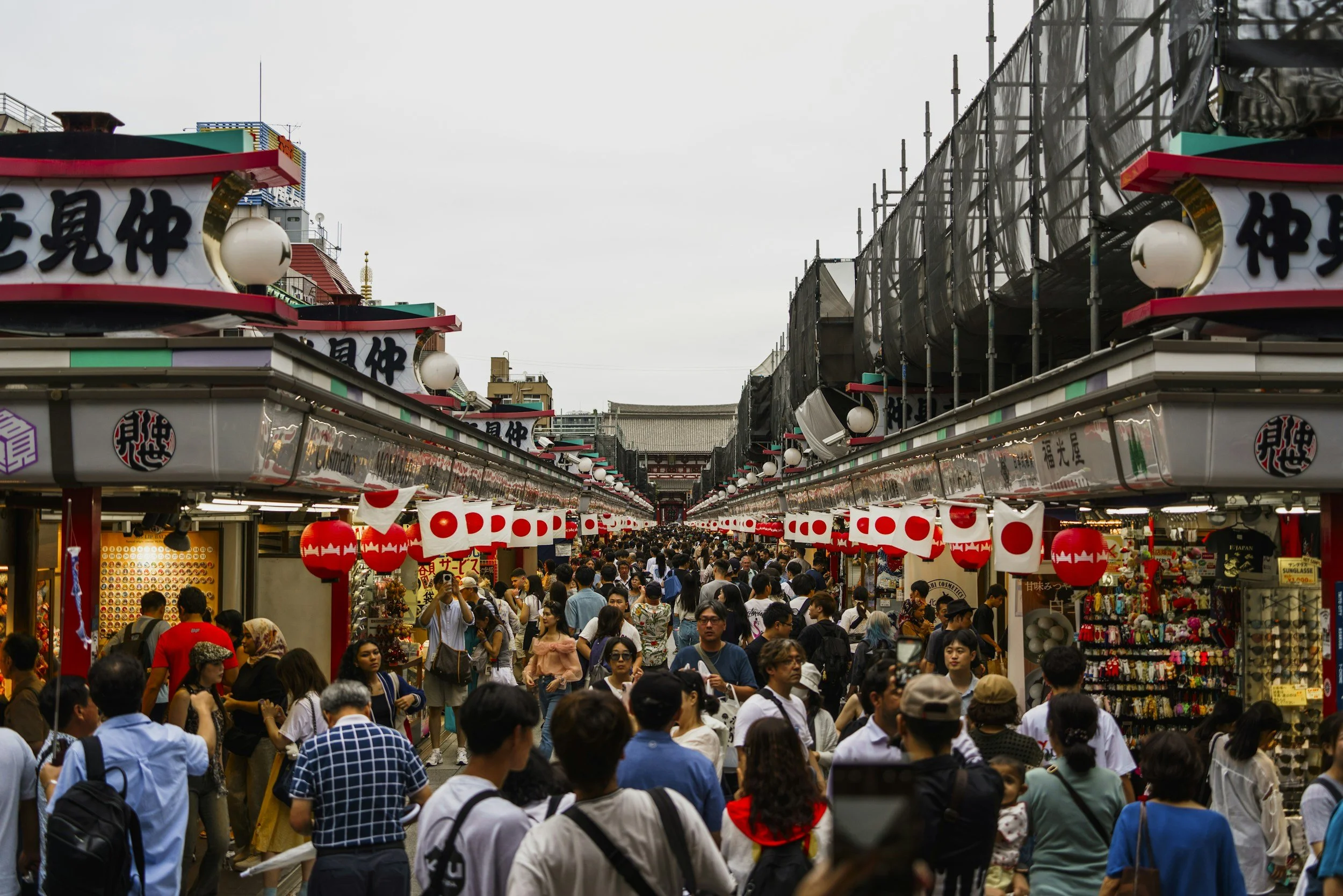
A traveler may imagine quiet traditional streets after watching cinematic videos online. Then they arrive at midday in Higashiyama during peak season and find dense crowds, selfie sticks and long lines.
Calm, serene temples? They exist in Kyoto, if you know where to go - but that’s not where most tourists are going in Kyoto.
The issue is not that social media is fake - not per se.
The issue is that social media compresses reality into highlight moments while removing context:
time of day
crowd conditions
weather
fatigue
transit time
seasonal differences (e.g. Japan’s summer heat & humidity!)
the emotional experience of moving through the space
Some places look incredible for 90 seconds and feel stressful for three hours.
Other places barely trend online and end up becoming the favorite memory of the trip - if you manage to push past the FOMO and get off the beaten path.
Japan’s “Golden Route” Is Not the Problem
People sometimes blame the classic Tokyo-Kyoto-Osaka route for overtourism or repetitive itineraries.
But this “Golden Route” itself is not the issue.
For first time visitors, those places are famous for good reasons.
The real problem is unrealistic planning.
Travelers often try to:
experience Tokyo deeply in three days
squeeze Hakone into one night
“do” Kyoto in two days
add multiple day trips
visit every major district
keep every option on the table
You can imagine how the itinerary starts collapsing under its own weight.
But you don’t have to do that. You can go beyond the surface, go deeper, go slower.
A slower trip to Japan often creates stronger memories than a hyper efficient one.
Travelers to Japan Are Arriving Overprepared
This is one of the biggest shifts we’ve seen in recent years.
Many travelers no longer arrive needing information.
They arrive needing editing.
They need someone to help answer questions like:
What should we cut?
Which parts are unrealistic?
Where are we overcomplicating things?
Which choices matter most?
Are we moving around too much?
Are we trying to optimize every hour?
Is this pace sustainable for us specifically?
This is especially true because modern travelers are highly informed but often emotionally overloaded.
Planning becomes mentally exhausting after months of decision making.
At a certain point, even simple choices feel heavy.
Reddit Is Useful; Reddit Is Also Chaos.
Reddit can be fantastic for Japan travel.
You’ll find:
detailed firsthand reports
honest opinions
niche recommendations
practical advice
current observations
You’ll also find:
extreme opinions
contradictory advice
unrealistic itineraries
people projecting their personal travel style onto everyone else
travelers (over)confidently speaking after one trip
A common pattern looks like this:
one thread says Kyoto Station is the smartest place to stay
another says it ruins the atmosphere
one person says Osaka is overrated
another says it’s the soul of Japan
one traveler says you need five nights in Tokyo
another says Tokyo is overwhelming and should be shortened
None of these people are necessarily wrong.
They simply traveled differently.
One of the hardest parts of planning Japan is realizing there is no universally correct itinerary.
Overtourism in Japan Has Changed Planning IRL
Travel advice from even five years ago can already feel outdated in some areas.
Certain places that once felt relatively calm now experience:
massive daytime congestion
long queues
packed buses
reservation shortages
heavy tourist concentration
This does not mean travelers should avoid famous places entirely.
It does mean Japan travel planning requires more realism now.
For example:
Kyoto often works better early morning and evening
some “hidden gems” are no longer hidden
popular observation decks may require advance booking
certain scenic trains sell out rapidly
social media famous cafes may involve long waits
Experienced planning today is less about chasing secret places and more about understanding timing, pace and expectations.
The Emotional Side of Planning Your Japan Trip
People rarely talk about this openly, but planning fatigue is real.
At first, researching Japan feels exciting.
Then weeks pass.
Then months.
Eventually travelers can start feeling:
mentally scattered
emotionally tired
afraid of making mistakes
unable to finalize decisions
stuck endlessly revising the itinerary
We often meet travelers who say some version of:
“We have too much information now.”
That sentence barely existed ten years ago.
Modern Japan planning often stops being limited by information and starts being limited by mental bandwidth.
What Travelers Are Really Looking For Now
Most people don’t need another listicle.
They need perspective.
They need someone who can say:
this pace is realistic
this transfer day is harder than it looks
you do not need six hotel changes
this neighborhood fits your travel style better
your Kyoto section needs breathing room
you are trying to fit two trips into one
That is increasingly where human guidance matters.
Not replacing AI.
Not replacing research.
Helping travelers interpret and refine what you’ve already gathered.
Planning Japan Should Still Feel Exciting!
Despite all of this, Japan remains one of the most rewarding places in the world to travel independently.
The train system works remarkably well. Regional travel is accessible. Food quality is consistently high. Infrastructure is excellent. There is incredible variety packed into relatively manageable distances.
The goal is not perfect optimization.
The goal is building a trip that feels doable, memorable & enjoyable for you.
Often the best Japan itineraries are not the ones that maximize checklist highlights.
They are the ones that leave room to breathe.
A More Grounded Way to Plan Japan
At Japan Travel Pros, most of our work today involves helping travelers simplify, refine and gain confidence in plans they already started.
Sometimes that means:
helping trim an overloaded itinerary
assessing hotel choices
improving pace
explaining realistic transit expectations
helping travelers make peace with tradeoffs
identifying where AI suggestions make sense and where they break down in real life
You do not need to throw out your research.
You probably just need help turning it into a trip that works well on the ground.
If you’d like another set of experienced eyes on your itinerary, why not schedule an itinerary review or consultation with Japan Travel Pros.